Sagrado Corazon Sacred Heart: An Interview with Delilah Montoya
Written by Hannah Cerne, UNMAM Research Assistant. Editor’s Note: This transcript has been edited for length and clarity.
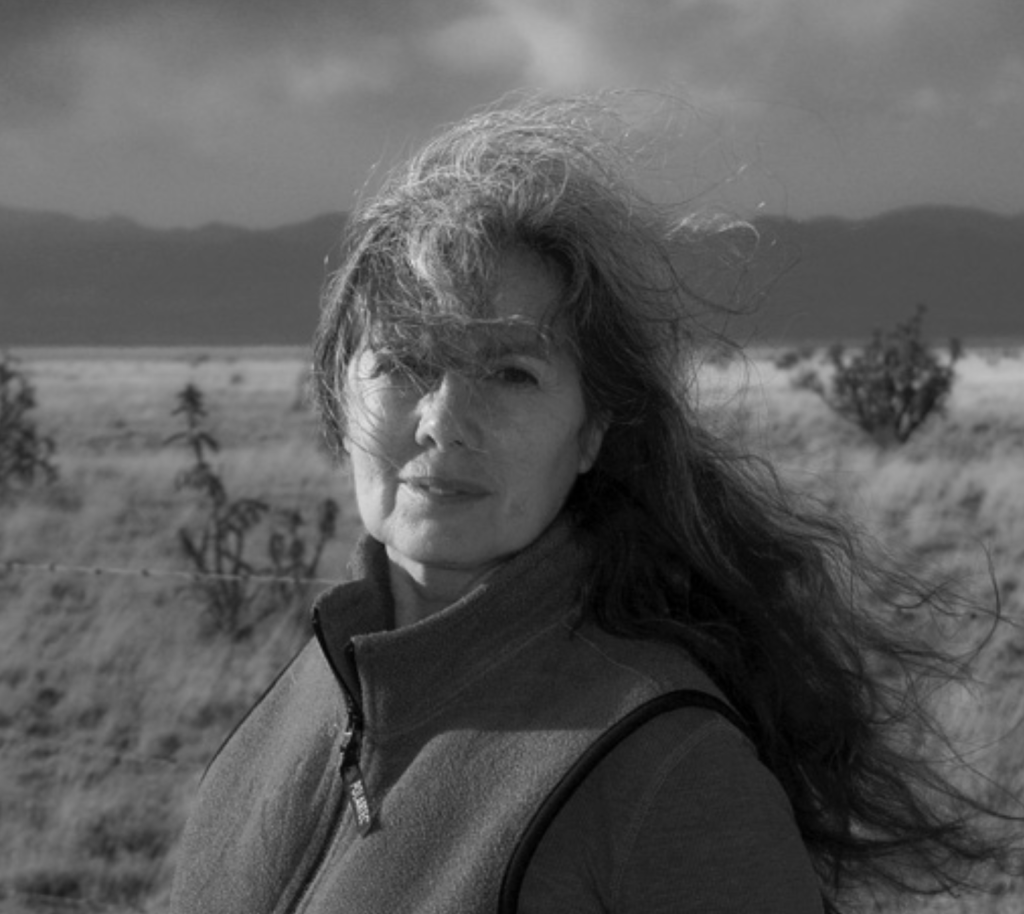
Portrait of Delilah Montoya photographed and published by the University of Houston in an interview by Nerissa Gomez on August 5, 2020. https://uh.edu/kgmca/about/news/2020/delilah-montoya.php
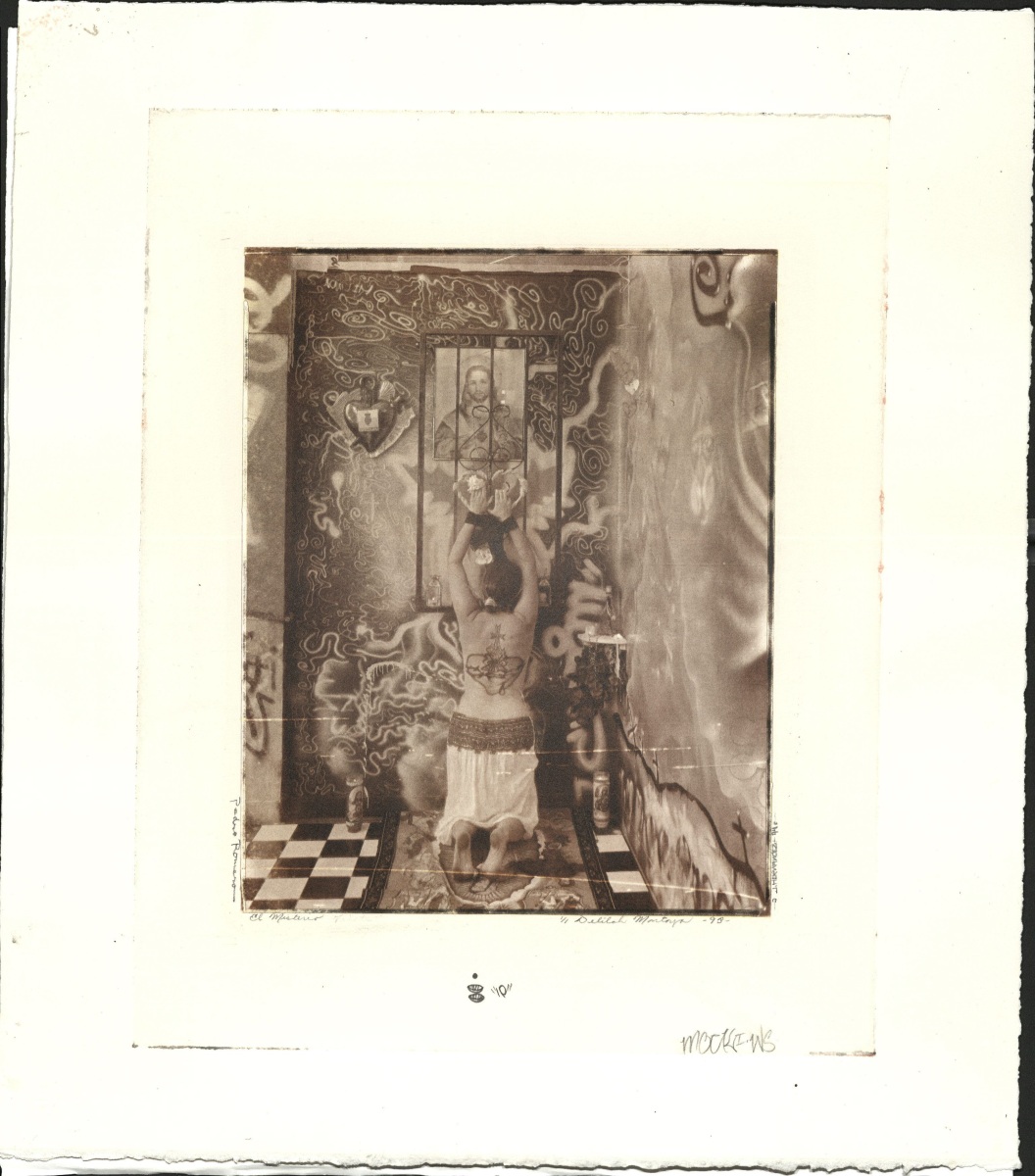
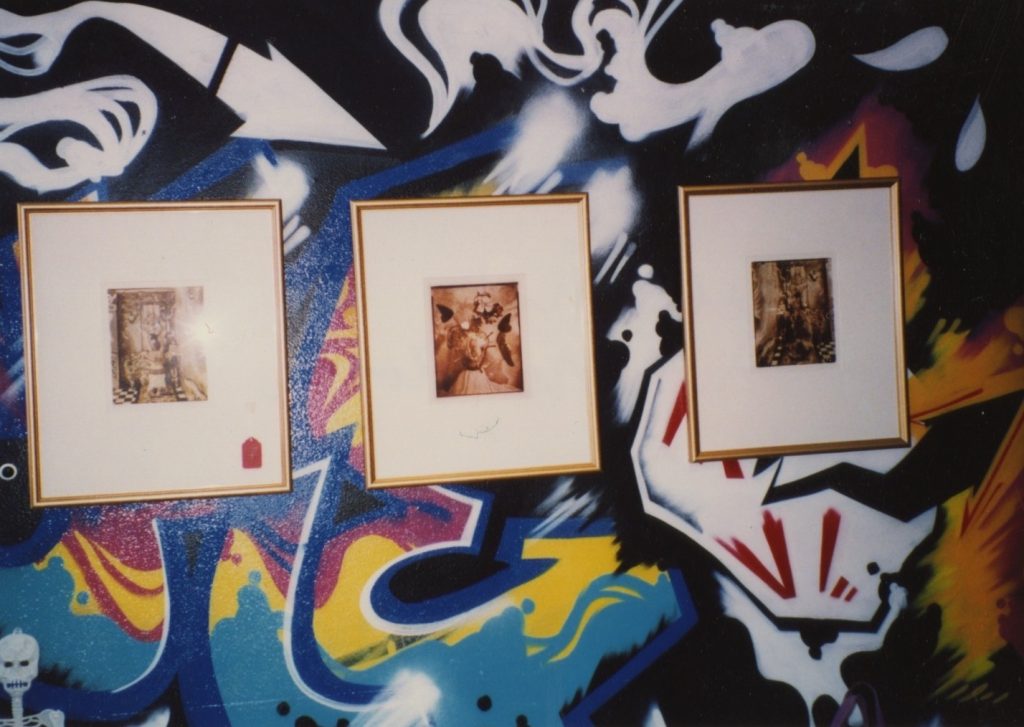
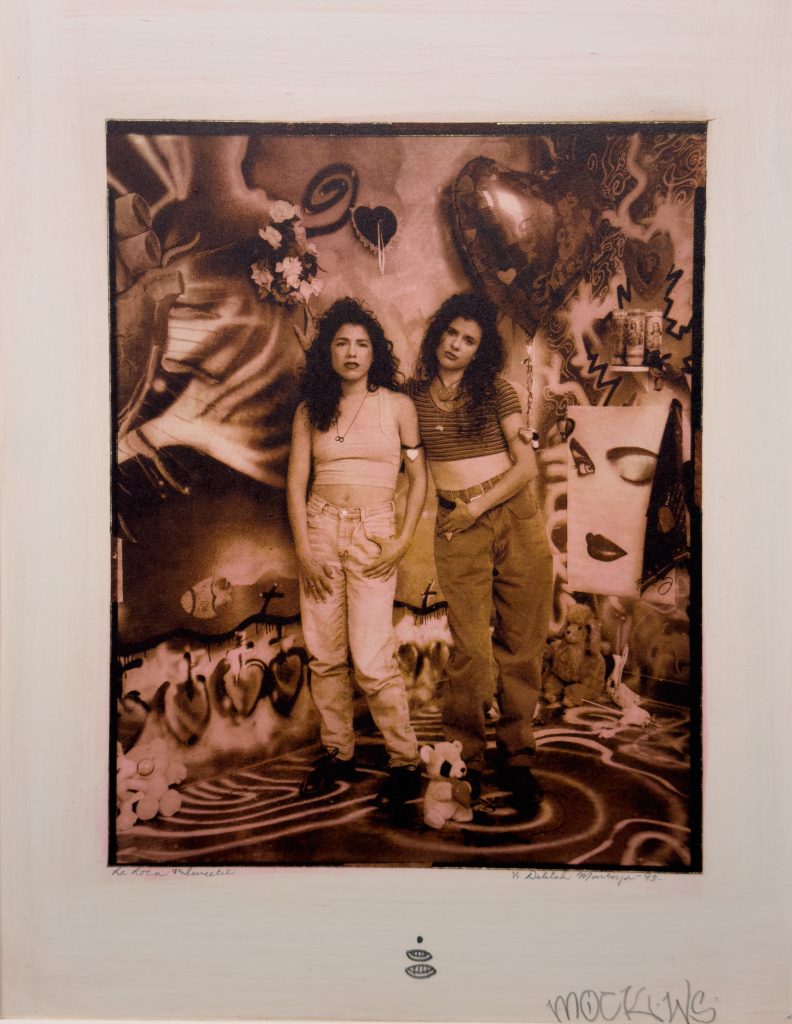
Delilah Montoya is a contemporary Chicana artist who was born in Fort Worth, Texas and raised in Omaha, Nebraska. Montoya moved to New Mexico to earn a BA, MA, and MFA in Photography from The University of New Mexico (UNM) between 1984 – 1994. Recently, I had the opportunity to sit down and chat with Montoya over a Zoom meeting. Throughout our conversation, she spoke of her experience as a student at UNM, her relationship with the University of New Mexico Art Museum (UNMAM), and her research and artwork as she pursued her education. Montoya was one of the graduates in 1994 selected to be part of the Juried Graduate Student Art Exhibition at UNMAM. The exhibition featured her works titled Corazon Sogrado (1993), El Misterio (1993), and El Misterio de Triste – Sueltame (1993). A collotype from Montoya’s master’s thesis titled, Sagrado Corazon: Loca y Sweetie (1993), is currently on display in the exhibition Hindsight Insight 4.0 at UNMAM throughout the Spring 2024 semester.
Read the full transcript of my conversation with Delilah Montoya below.
HANNAH CERNE: Hi, Delilah! How are you doing?
DELILAH MONTOYA: Hi, I am doing good. Thank you.
HANNAH CERNE: So, my first question is, what drew you to attend UNM for your undergraduate and graduate degrees?
DELILAH MONTOYA: Well, there were a couple of things. My other family is from New Mexico, and we used to visit when I was a kid living in Omaha, we would always come back to New Mexico to visit relatives, and it was just so much better here. I lived in Omaha, Nebraska where there was a meat packing place. We lived a half mile from stockyards, and it smelled bad. After a while, you didn’t smell it anymore, but I remember when we’d come back home from Las Vegas, New Mexico, with my mom, and there were mountains, blue skies, fresh air, and all those things. Then we started heading back to Omaha, and we’d get to the outskirts, and it smelt bad there. So, there was always this feeling that things were nice and beautiful there.
I attended a two-year college, Metro Technical Community College, and I started taking photography. I was told that there were people in Albuquerque, New Mexico at UNM, and that there was a high-powered photography program there. People like Van Deren Coke and Beaumont Newhall were at UNM, and these are people being studied now. I realized that I wanted to have the opportunity to study with some high-powered people, and I wanted to come back to New Mexico too, it was a win-win situation.
I was going to be a Chicana artist, and there were a lot of people like my teachers in high school who said there’s no such thing as Chicana art. I thought “Oh, let me show you. I’m going to reinvent myself. I’m going to have my identity.”
HC: How did you develop the concept for your master’s thesis? Did your concept change or evolve throughout the process of working on it? Did anyone in your life family, friends, professors, or mentors inspire your work?
DM: So, I had one master’s that I did, and it was Saints and Sinners, and the other was Corazon Sagrado Sacred Heart. One of the reasons I wanted to come back to New Mexico was because I was interested in my mother’s culture, and I wanted to find out more about it and base my aesthetic on it. I wanted to get involved because I was very much involved in the Chicana movement in Omaha, NE. I was going to be a Chicana artist, and there were a lot of people like my teachers in high school who said there’s no such thing as Chicana art. I thought “Oh, let me show you. I’m going to reinvent myself. I’m going to have my identity.” The creation of an identity that was truer to my interests and family history.
My thesis Corazon Sagrado Sacred Heart began with my fascination with the Sacred Heart. The Sacred Heart is one of those things that, like in Catholicism, it’s a disembodied heart. I asked myself when did the disembodied heart show up in Catholicism? One thing that I found about the disembodied heart is that it showed up after the Latin American Conquest and New World Conquest. So, we know what the disembodied heart meant to indigenous people in Mexico, the disembodied heart was a part of the sacrifice. So, I thought, wait a minute, it shows up after the conquest, and that was of huge significance to me. Because we see Catholicism utilize the Sacred Heart to try and get a whole group of people to change their identity. They’re transforming an identity, and one of the ways of doing that is to bring in the icons that they understand. Now, what does the disembodied heart mean? So, I began to think about it and look at the disembodied heart and the way it is perceived. I thought about it and thought I would take portraits of the Chicano people in Albuquerque rebuilding their hearts and calling it the Sagrado Corazon Sacred Heart.