When Tamarind Institute moved from Los Angeles to Albuquerque in 1970, it maintained its mission to preserve and advance the art of lithography through collaboration between artists and master printers. During the decades that followed, that commitment expanded well beyond the walls of the workshop, connecting artists, printers and communities across continents.
On August 18, 2026, an exhibition exploring that history opens in the University of New Mexico Art Museum (UNMAM)’s Clinton Adams Gallery.
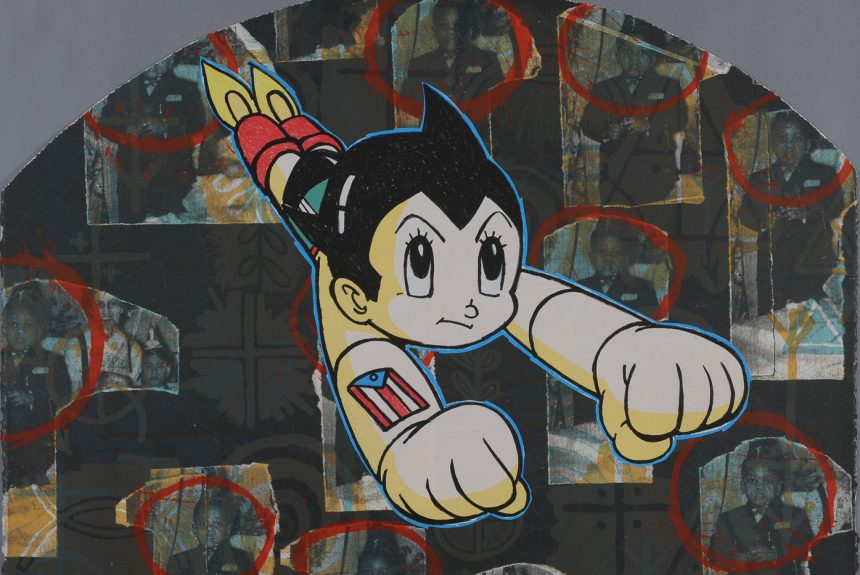
Tamarind Goes Global (1985-2020), on view through March 12, 2027, examines how Tamarind Institute transformed from a national workshop into a globally connected center for contemporary printmaking.
The exhibition draws from UNMAM’s Tamarind Archive Collection, which contains impressions of every print published by Tamarind Lithography Workshop (Los Angeles, 1960-70) and Tamarind Institute (Albuquerque, 1970-present). Since its founding, Tamarind has published more than 6,000 prints.
The exhibition also includes materials from UNM’s Center for Southwest Research (CSWR), Tamarind Institute and local collections, along with new interviews with former and current directors, printers and artists, and previously unseen film footage of the workshop’s relocation from Los Angeles to Albuquerque.
Together, the artwork and archival materials reveal how collaborative printmaking became a powerful tool for encouraging dialogue, solidarity and creative exchange across diverse communities.
Celebrating Decades of International Exchange
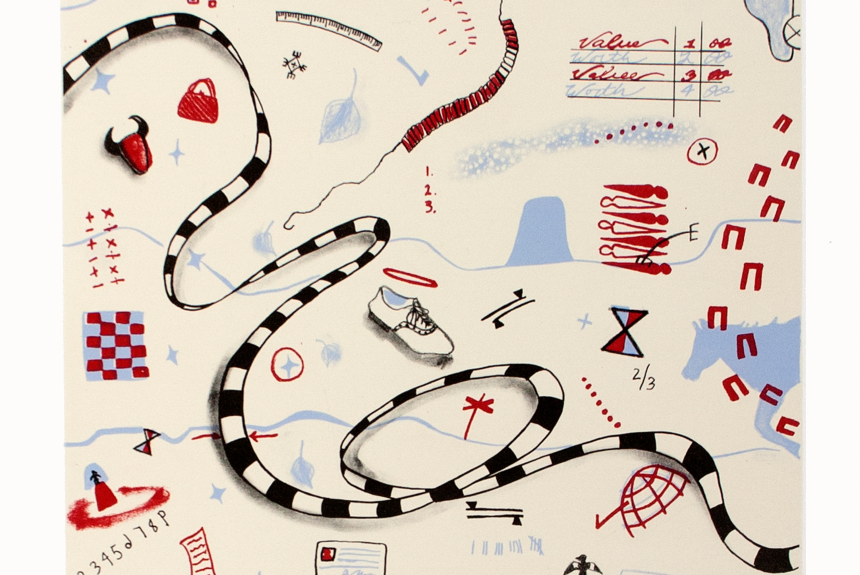
Through collaborations with artists from Eastern Europe, Africa, the Americas and Australia, Tamarind developed projects that brought together artists whose lives and work were shaped by distinct cultural, historical and political contexts.
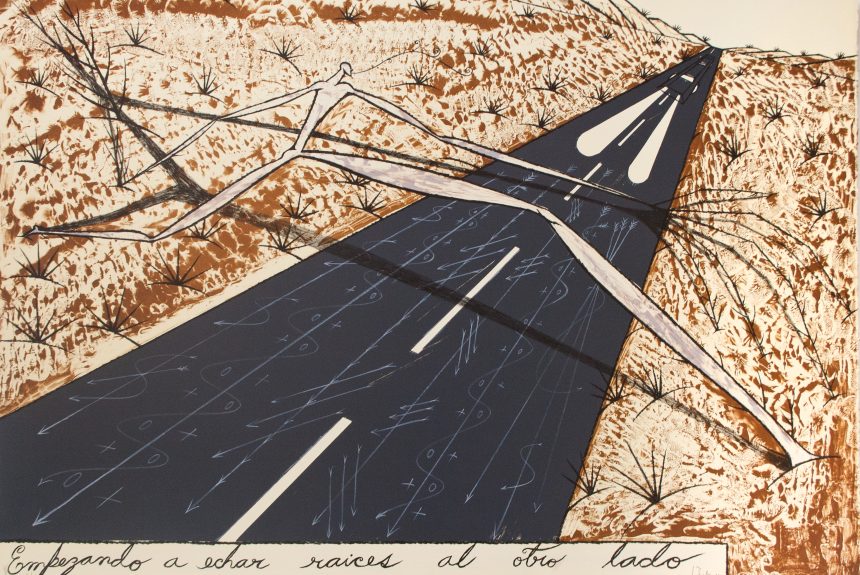
Tamarind Goes Global highlights several of these collaborative projects, including Mexico Nueve (1984), Trickster (1999), Exquisite Corpse (2000-2015), Connections (2002-2004) and Landmarks (2015).
The exhibition is co-curated by Angel Jiang, UNMAM Curator of Prints and Drawings, and Hannah Cerne, former Curatorial Research Assistant and dual Master’s candidate in Art History and Museum Studies who graduated from UNM in 2026. It represents years of research into a chapter of Tamarind’s history that has received relatively little attention.
“There are so many exhibitions that can be made from the Tamarind Archive Collection,” Jiang said, noting that she and Cerne have engaged closely with the collection for three years. “As stewards of that collection, it felt like the appropriate moment to reflect on this particular period in Tamarind’s history.”
The exhibition is in line with our institutional priorities, our focus on student engagement and our community ties with our partners,” Jiang said.
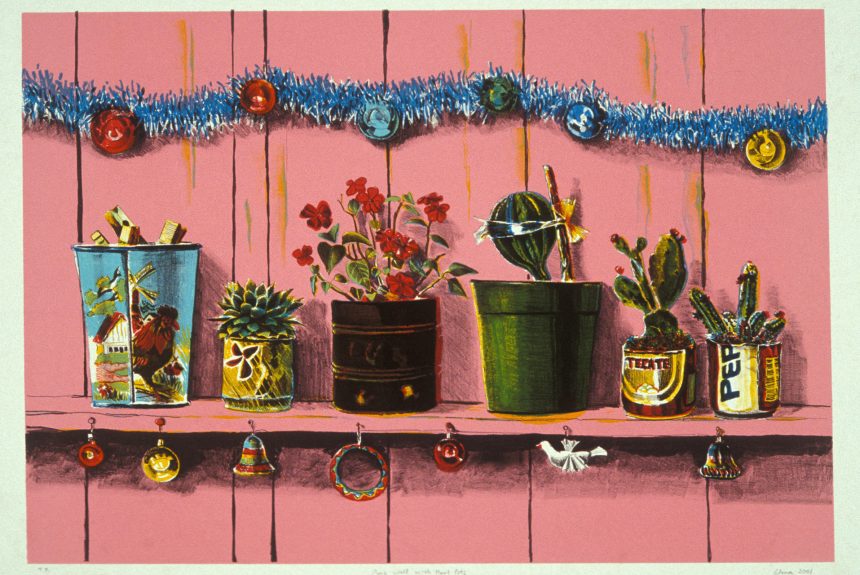
The prints on display represent a form of cultural diplomacy and cultural connection distinctive to Tamarind, she said, adding that the exhibition is timely on an additional level. “A lot of the works touch on immigration, or feeling like an alien, or feeling not at home. A lot of these artists’ careers are focused on that outside of their work at Tamarind,” Cerne said.
Documenting a Transformative Period
Tamarind Goes Global is Cerne’s Museum Studies Master’s project. Her Art History Master’s Thesis traces the history of Tamarind’s transition from Los Angeles to Albuquerque and its incorporation into the College of Fine Arts at UNM. This period of Tamarind’s history had remained largely undocumented.
“When I was doing the institutional research, I found a lot on those early years and moments of transition,” Cerne said. “But starting around 1985, there was a gap in the written history.” That gap coincided with a transformative era for Tamarind during the 1980s and beyond, when the institute increasingly pursued and embraced international collaborations.
She notes that prints from this significant period have never been exhibited together until now.
Celebrating Printmaking as Cultural Diplomacy
One of the central themes in the exhibition is the role that art can play in building relationships across borders.
Jiang says the period represented in Tamarind Goes Global emerged during a time of optimism about arts’ ability to foster dialogue and understanding. At the time, Tamarind’s leadership sought innovative partnerships and funding opportunities that allowed artists from different cultural and political contexts to work together.
The resulting works reflect diverse artistic perspectives while documenting the collaborative process that remains at the heart of Tamarind’s mission. The exhibition asks visitors to look beyond each print and consider the relationships, conversations and technical expertise that made each work possible.
Recognizing Master Printers
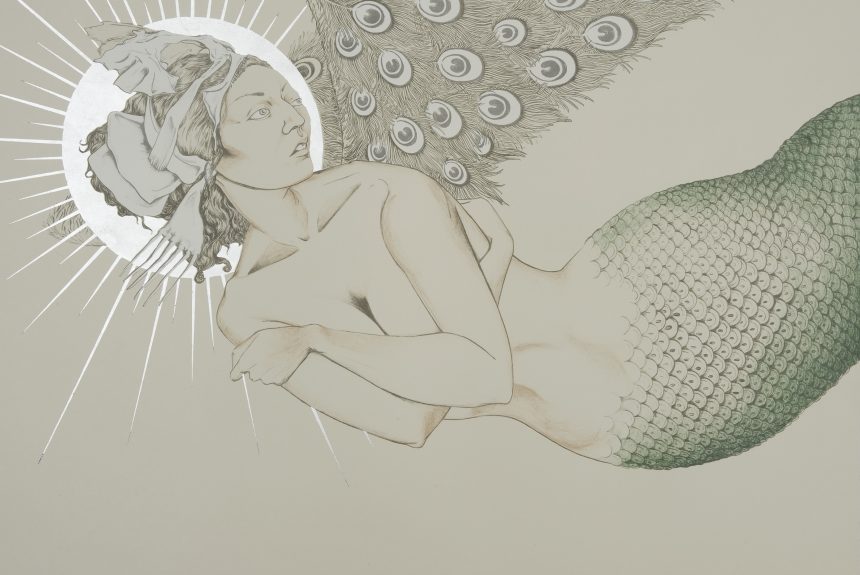
An important focus in Tamarind Goes Global is the role of the master printer, who works closely with an artist throughout the creative process, helping translate ideas into lithographs while navigating the medium’s technical complexities.
“The role of the master printer is often misunderstood,” Cerne said. “They’re sometimes seen as an artist but that’s not what they are, or as a technician, and that’s not what they are either.” Instead, they walk a fine line, guiding the artists and the process. Cerne interviewed several master printers during her exhibition research.
Jiang points out that Tamarind was instrumental in developing the concept of collaborative printmaking, in which artists and printers work in a creative partnership, and in introducing fine art lithography to artists who have not yet practiced it.
“Because lithography is so technical, artists often need someone to provide guidance to help realize their ideas in a form they may have never explored before,” she said.
Reflecting that philosophy, the exhibition credits collaborating printers alongside artists, highlighting their contributions as makers and collaborators. “In our position as the stewards of the Tamarind Archive Collection, we feel a responsibility to make that information visible in the exhibition labels,” Jiang said. She added that identifying printers alongside artists provides important historical context. Many printers developed long associations with influential workshops, and their contributions are a crucial part of understanding how these works were created.

Sharing Hidden Gems
The exhibition’s archival materials help trace Tamarind’s evolution. Among the most exciting discoveries is a recently digitized film that documents Tamarind’s relocation from Los Angeles to Albuquerque. The footage, filmed by then-trainee printer Harry Westlund, has remained unseen for decades.
He handed me this eight-millimeter film that had never been digitized before,” Cerne said. “You see the stones being moved, the crates being moved. It feels like the little gem of this project.”
New videos, with interviews conducted by Cerne, feature former Tamarind Institute Director Marjorie Devon, Master Printers Bill Lagattuta and Valpuri Remling and artist Maja Ruznic.
“An important component of this exhibition is the work that Hannah did in assembling what is essentially an oral history of the institution, and also the very important archival research she’s done with assembling Tamarind annual reports, and digging into pictorial histories and other sources,” said Jiang.
Emphasizing a Spirit of Collaboration
For both curators, a spirit of partnership mirrors the commitment to collaboration that is so much a part of Tamarind’s own history. “A desire to work across institutions is embedded in this show. That’s an important part of what this project represents,” said Jiang.
Cerne says she hopes visitors will leave the exhibition inspired to learn more about Tamarind Institute and its continuing work.
I hope that when people walk away, they go to Tamarind, wanting to learn more. I hope they look into open houses at Tamarind, and I hope this leads to even more of a bridge between UNMAM and Tamarind.”
Jiang says the show has broad appeal, showcasing not only geographic, cultural and technical diversity but the breadth of contemporary lithography. “I think this is a show that people who are very familiar with Tamarind can get something out of. Someone new to Tamarind can also gain an introduction and understand the breadth of what they do.”